Advocacy
Advocacy for Protestant Education
In many countries across the globe, thousands of schools with a Protestant Christian ethos provide high-quality education that encourages future generations to take on personal responsibility to serve the common good with integrity. Protestant education is instrumental in fostering peace and justice, intercultural and interreligious understanding, and care for creation. GPEN aims at the flourishing of Protestant education and in particular of Protestant schools across the globe in their wide variety.
- Giving voice and representing Protestant education
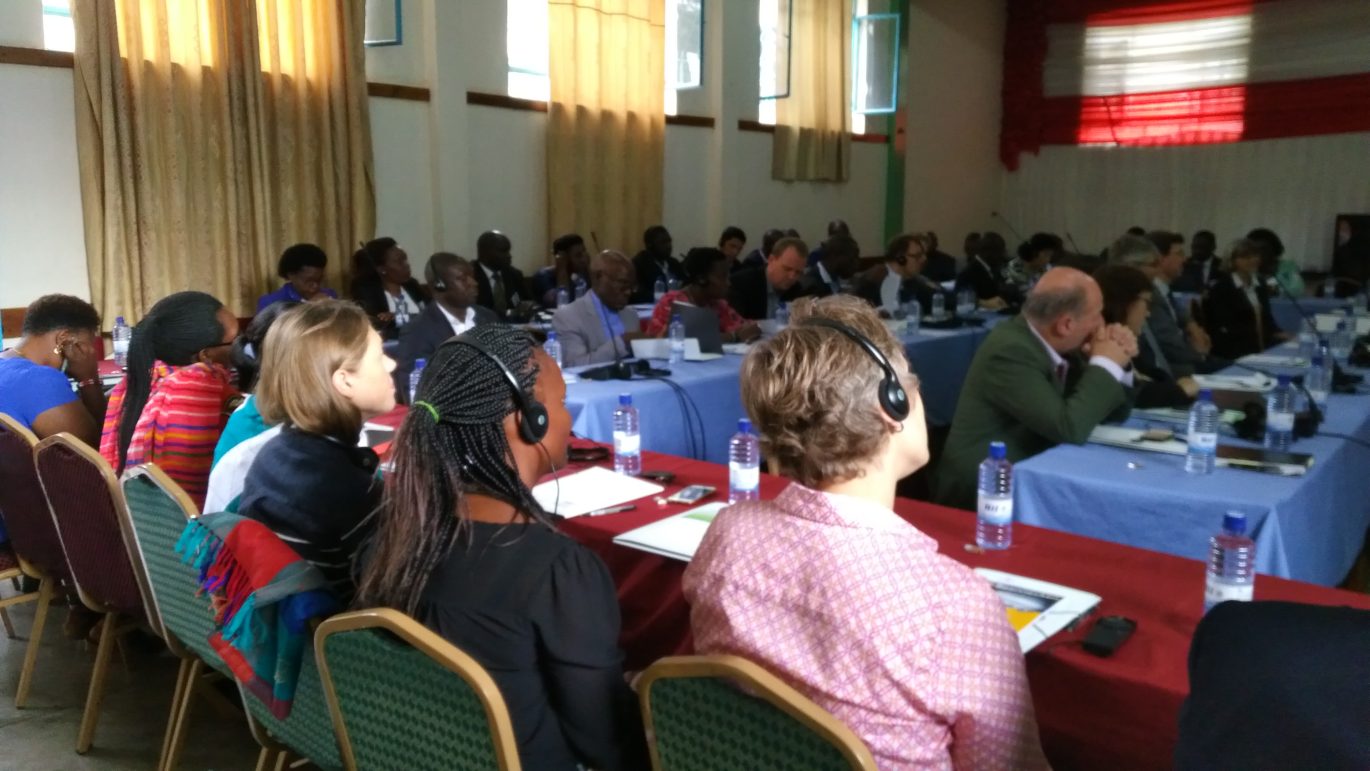
GPEN serves to give voice to the Protestant education sector. As we represent Protestant schools at continental and international levels, we defend the interests and highlight the challenges faced by these schools within their respective countries. Therefore, we are working closely together with system leaders and foster international exchanges among them on advocacy issues that are relevant for Protestant education. - Freedom of education and educational pluralism
Protestant education can only really flourish within national contexts in which the freedom of education is fully guaranteed, and educational pluralism is firmly established. Parents should be able to choose the education of their children that is in accordance with their religious beliefs or world views. These principles are in line with international and continental treaties on human rights, concerning the Right to Education.
Nation-states should allow for a flourishing independent school sector, including faith-based schools that are financed on an equal footing with state schools. Only in this way, free parental choice and the right to education as universal human rights can be safeguarded for all parents and children, regardless of their economic situation. - Strengthening national and regional advocacy
GPEN supports and assists national organizations, church-run educational institutions, church education departments and regional and continental Protestant education networks in order to promote and protect Protestant schools within their specific contexts. We aim at having strong national networks of Protestant schools in every country where they are present and offer support for their advocacy activities. - Cooperation
GPEN pursues advocacy through constructive dialogue, international cooperation, and mutual learning among educators, institutions, churches, and policymakers. At the international level, GPEN cooperates with like-minded partners, working closely together with OIDEL (an NGO with consultative status within UN-Organizations and the Council of Europe) and our Roman-Catholic sister-organization OIEC.
Global Freedom of Education Index
If you would like to know how your country ranks in terms of freedom of education, you can find out more about the latest Global FofE Index here. It is compiled by researchers at OIDEL, a non-governmental organisation of which GPEN is a member. As usual, the top four countries are Ireland, the Netherlands, Belgium and the United Kingdom, followed by Chile. The United States ranks 19th and Germany 30th. The highest-ranked African country is Sierra Leone in 27th place. In general, funding for non-state schools is improving slightly in a number of countries. On the other hand, researchers point out that several national governments are increasingly restricting the curriculum. As evangelical schools around the world, we continue to fight for greater educational freedom, free choice for parents and equal funding for non-state schools. That is why GPEN continues to support the work of OIDEL.
OIDEL Summer University
The OIDEL Summer University on the Right to Education is an international programme designed to equip participants to advance education as a universal human right. They engage with leading experts, analyse global education challenges and observe policy processes first-hand through lectures, workshops and institutional visits. The programme is suited to students and professionals seeking practical tools and a comprehensive global perspective on the right to education. For further information click here.